


Welcome to lobster.blog — your weekly cheat code for agentic AI. If someone forwarded this to you, subscribe here so you don’t miss the next one.
GM lobsters 🦞
The most common question in every reply, DM, and group chat about agentic AI is the same:
“Should I be worried about my job?”
Short answer: it depends on what your job actually is.
Let’s break it down. This is a 4-minute read.
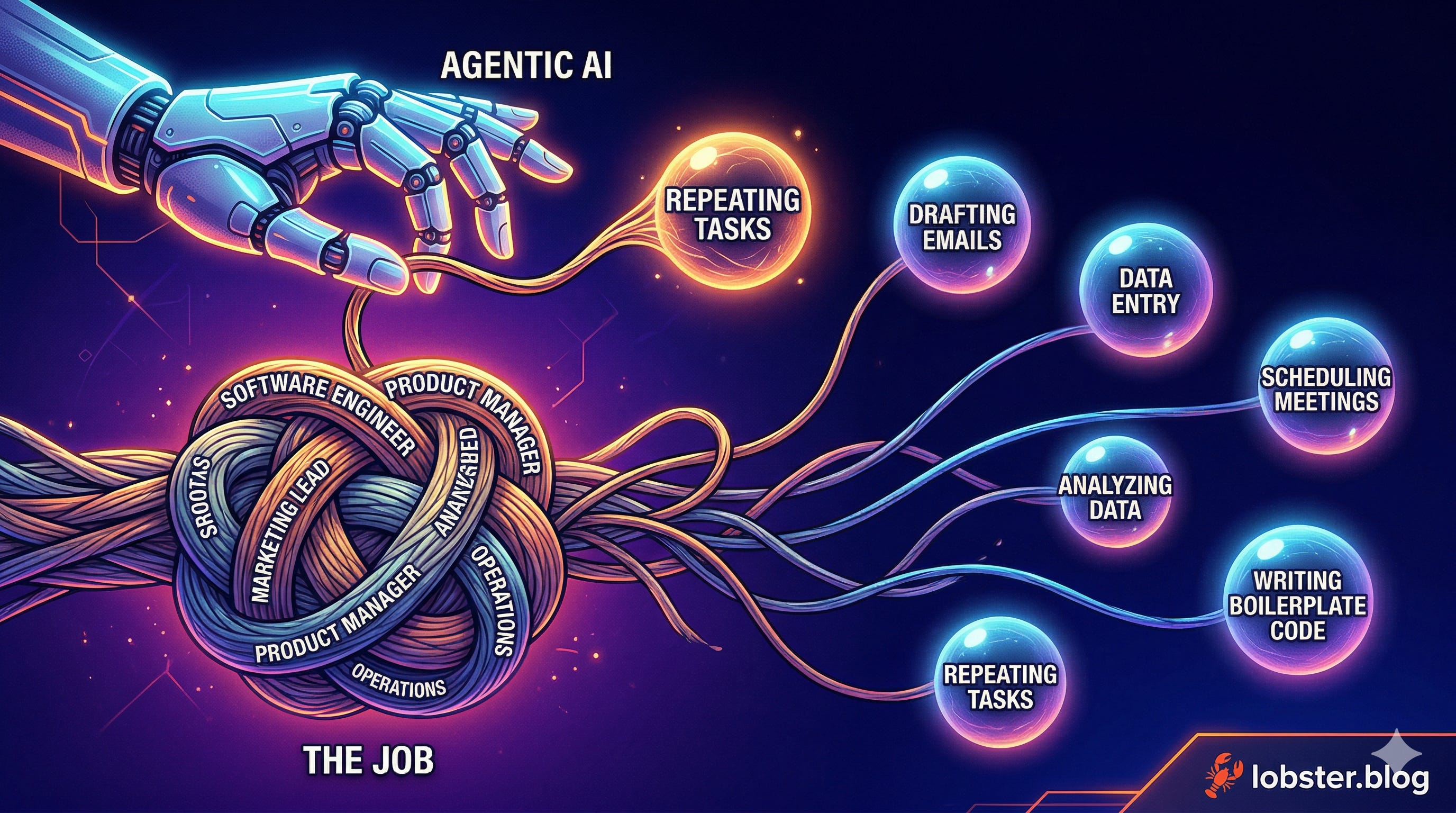
🧠 Your Job Is Not a Job. It’s a Bundle of Tasks.
Here’s the reframe that changes everything.
We think in job titles: Software Engineer. Product Manager. Marketing Lead. Operations.
But companies don’t pay for titles. They pay for work getting done. And “work” is really just a collection of tasks — writing code, scheduling meetings, analyzing data, sending emails, researching options, updating systems.
Jobs are bundles of tasks. That’s it.
And AI agents don’t replace jobs. They replace tasks.
The question isn’t “Will AI replace software engineers?” It’s: “Which parts of a software engineer’s day can an agent handle right now?”
Once that percentage gets high enough, the role itself becomes optional.
⚡ The Task-by-Task Breakdown
Let’s make this concrete.
Software Engineering
What agents can already do: generate boilerplate code, write and run tests, debug common errors, refactor for readability, scaffold entire projects from a prompt.
What still requires a human: system architecture decisions, navigating ambiguous tradeoffs, understanding user needs, knowing when not to build something.
Cursor, GitHub Copilot, and Claude Code are already shipping these capabilities. OpenClaw takes it further — agents that can open PRs, run CI pipelines, and deploy code without a human in the loop.
Product, Marketing & Operations
What agents can already do: generate reports from dashboards, draft content and emails, schedule across calendars, research competitors, summarize meeting notes, update CRMs.
What still requires a human: setting strategy, making judgment calls with incomplete information, building relationships, having taste about what feels right.
Microsoft’s Power Platform Wave 1 (shipping April 2026) is literally built around this — autonomous business apps that make decisions, learn from interactions, and execute without constant oversight.
The Pattern
Notice the split. The tasks that get automated are repeatable, describable, and process-driven. The tasks that stay are about judgment, strategy, and taste.
⚠️ The Most Dangerous Place to Be
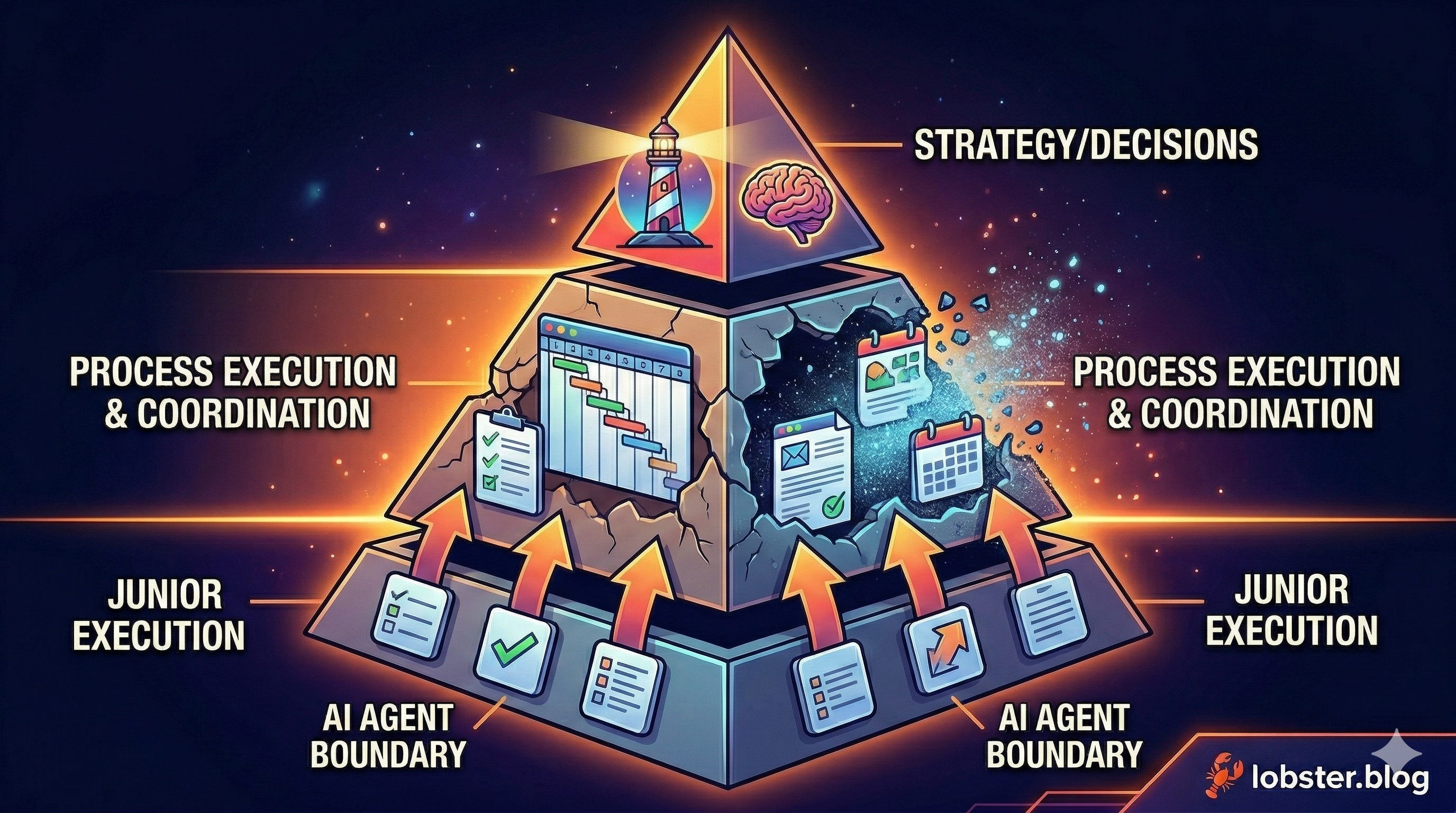
You might assume junior roles are most at risk. Or that experts are safe.
Neither is quite right.
The most vulnerable position is the middle — roles that are mostly process execution with some coordination thrown in. Think: the person who pulls reports, formats decks, schedules reviews, and routes requests. Each individual task is being automated right now.
The safest positions? People who frame problems, make decisions under uncertainty, and direct the work — including directing AI agents.
🚀 1 Person = 10x Output (And What That Means)
This is the part that should keep managers up at night.
AI agents don’t just automate tasks. They compress teams. Work that used to require five people and two weeks can now be done by one person in a day — if that person knows how to orchestrate agents effectively.
The downstream effects are real:
Smaller teams, faster execution. Startups with 5 people are shipping what used to take 50. Coordination overhead drops when there are fewer humans to coordinate.
“Glue work” roles shrink. The project coordinator who tracks dependencies, schedules syncs, and sends status updates? An agent handles most of that now.
Output expectations reset. When everyone can produce 10x, 1x becomes unacceptable. The bar moves — fast.
🧩 What Still Matters (The Skills That Get More Valuable)
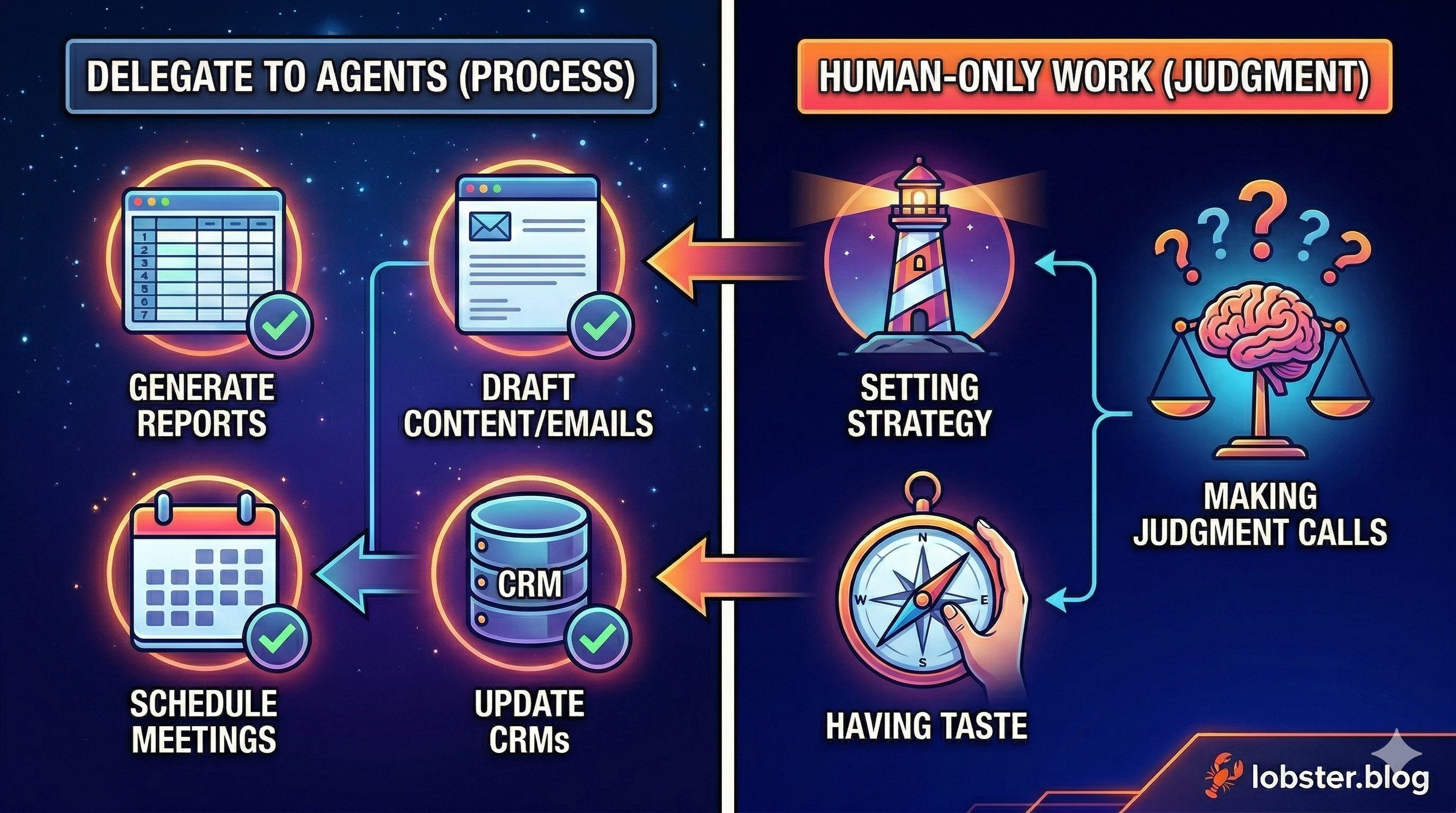
Not everything gets automated. Some skills actually become more important when agents handle the busywork:
Judgment — Knowing what to do when there’s no clear answer.
Problem framing — Asking the right question matters more than executing the answer.
Taste — Knowing what “good” looks like. Agents can generate 50 options in seconds. Someone has to pick the right one.
Agent fluency — The ability to break a goal into tasks, assign them to the right agents, check the output, and iterate. This is the new core competency.
The people who win aren’t competing against agents. They’re the ones who can direct them.
💣 The Real Question to Ask Yourself
Don’t ask: “Will AI replace my job?”
Ask: “How much of my work is already replaceable?”
Be honest. List every task you do in a week. Flag the ones an AI agent could handle today — not perfectly, but well enough. If that number is over 50%, you’re in the blast radius.
That doesn’t mean you’re doomed. It means you should shift your time toward the work that isn’t replaceable — and learn to use agents for the rest.
⚡ Three Things You Should Do This Week
1. Audit your tasks. Write down everything you do in a typical week. Separate the repeatable from the judgment-heavy.
2. Automate one thing. Pick your most repetitive weekly task and try handing it to an AI agent. Even if it only gets you 70% of the way there, that’s 70% of your time back.
3. Reposition around judgment. Start spending more of your time on the work that requires human thinking — strategy, relationships, creative problem-solving. That’s where your value is heading.
🦞 TLDR
Jobs aren’t monoliths — they’re bundles of tasks, and agents replace tasks one at a time
The most vulnerable roles are process-heavy middle positions, not junior or senior
Agents compress teams: 1 person + agents = what used to take 5 people
The skills that matter now: judgment, taste, problem framing, and agent fluency
Don’t compete with agents — learn to direct them
The question isn’t “will AI take my job?” — it’s “how much of my work is already replaceable?”
That’s Issue #002. If you made it this far, you’re still a lobster. 🦞
Three things you can do right now:
Hit subscribe if this was forwarded to you — lobster.blog
Share this post with a coworker who’s been asking “should I be worried?”
Reply — what’s the one task in your job you’d automate first?
See you next time.
— The Lobster 🦞